CAMINO del COSTA Headline Animator

CAMINO del COSTA

Friday, 15 August 2014

Ebola outbreak vastly underestimated

The death toll from the world's worst outbreak of Ebola stood on Wednesday at 1,069 from 1,975 confirmed, probable and suspected cases, the agency said. The majority were in Guinea, Sierra Leone and Liberia, while four people have died in Nigeria. The agency's apparent acknowledgement the situation is worse than previously thought could spur governments and aid organisations to take stronger measures against the virus. "Staff at the outbreak sites see evidence that the numbers of reported cases and deaths vastly underestimate the magnitude of the outbreak," the organisation said. "WHO is coordinating a massive scaling up of the international response, marshalling support from individual countries, disease control agencies, agencies within the United Nations system, and others." International agencies are looking into emergency food drops and truck convoys to reach hungry people in Liberia and Sierra Leone cordoned off from the outside world to halt the spread of the virus, a top World Bank official said. In the latest sign of action by West African governments, Guinea has declared a public health emergency and is sending health workers to all affected border points, an official said. An estimated 377 people have died in Guinea since the outbreak began in March in remote parts of a border region near Sierra Leone and Liberia. Guinea says its outbreak is under control with the numbers of new cases falling, but the measures are needed to prevent new infections from neighbouring countries.

"Trucks full of health materials and carrying health personnel are going to all the border points with Liberia and Sierra Leone," Aboubacar Sidiki Diakit president of Guinea's Ebola commission, said late on Wednesday. As many as 3,000 people are waiting at 17 border points for a green light to enter the country, he said. "Any people who are sick will be immediately isolated. People will be followed up on. We can't take the risk of letting everyone through without checks."

Arrested for allegedly throwing two suitcases of cocaine out of a hotel window

Poice have established that a 39-year-old Irish man who was arrested in Spain after allegedly throwing two suitcases of cocaine out of a hotel window is a criminal who was previously targeted here in a proceeds-of-crime case. The suspect, who remains in custody in Valencia, has been named as Philip Grendon from Greenfort Drive, Clondalkin, and also with an address at Spiddal Road, Ballyfermot. Grendon's brother, Brian, is a member of a major west Dublin drugs gang who have been constant targets of gardai for 15 years. Already this year, officers based in Ballyfermot have been involved in the seizure of more than €1m worth of drugs from this crew who are considered one of the most organised and longest-established in the country.

The bizarre incident for which Grendon was arrested in Valencia happened last Friday just before 10pm at the four-star Tryp Valencia Oceanic Hotel. Police are said to be working on the theory that the alleged drugs trafficker, who had checked into the hotel a few hours earlier, confused noise from other guests entering and leaving their rooms with a rival gang trying to steal his drugs after suffering a paranoia attack. It is alleged that Grendon also removed ceiling tiles in his room, along with an air vent in an apparent attempt to hide the stash.

The 55kg of cocaine in the cases would have an estimated street value of more than €3.8m in Ireland. Sources who know Grendon say they are "surprised" that he would be trusted by a gang to be in charge of such a huge drugs haul. "Philip was always known to be a paranoid individual, but if what the Spanish police are saying is true, this is taking paranoia to a whole new level," a senior source said. Grendon's younger brother is convicted heroin dealer Brian Grendon (37), who was jailed for six years in December 2002 after he was busted with almost €2m worth of heroin in Palmerstown, west Dublin, the year before. shootings Brian Grendon was previously described in court by a senior detective as being linked to a gang who had in the past "used fatal shootings of anyone who compromised their business".

Philip Grendon appeared in court in Dublin in February 2012 when gardai prosecuted him under proceeds of crime legislation. Some of his associates were targeted by gardai as part of Operation Jumbo in 2002. They included murder victim David McCreevy (23), who was shot dead in Tallaght in 2002.

Wednesday, 13 August 2014

Spain to probe cigarette smuggling Crime.


EU's anti-fraud office on Monday urged Gibraltar and Spain to launch legal action after it found signs that organised crime was behind a rise in cigarette smuggling in southern Spain, AFP reports. The European Anti-Fraud Office (OLAF) made the recommendation after completing a probe it launched in August 2013 at the request of Madrid into a sharp rise in cigarette smuggling across the border between Gibraltar and Spain between 2009 and 2013. "The OLAF investigation has raised a number of concerns regarding the link between a significant increase in the size of the Gibraltar market for cigarettes over the past four years and the subsequent increase of cigarette smuggling across the frontier," a spokesman for the anti-fraud office said. "The concerns include indications of the involvement of organised crime," it added. "The OLAF final case report, and recommendations to initiate judicial proceedings related to the findings of the report, have been sent to the Spanish General State Prosecutor and to the Gibraltar Attorney General." Widespread cigarette smuggling between the tiny, low-tax British territory of Gibraltar to Spain is a major irritant in their frayed diplomatic relations. Smugglers buy the cigarettes in large volumes in Gibraltar at a price much lower than is charged in Spain, where the government in 2012 increased the sales tax to help plug a gaping public deficit. Spain in August introduced stringent border checks at its border with Gibraltar, leading to lengthy queues for motorists, in what it said was a move aimed at clamping down on cigarette smuggling.
But Gibraltar argues the stepped-up border controls are in retaliation for the installation of an artificial reef in its waters that has prevented Spanish boats from fishing there. Gibraltar Chief Minister Fabian Picardo welcomed the anti-fraud office report and said the territory wanted to work together with Spain to investigate the cigarette smuggling. "We wish any necessary investigations in this and in all areas to be carried out jointly between the competent Spanish and Gibraltar authorities in a genuine spirit of cooperation," he said. The government of Gibraltar said cigarette smuggling was already being brought under control thanks to the "draconian" measures it introduced in January. These include the introduction of searches of vehicles crossing into Spain and giving customs and police officers greater powers to fight smuggling. The Spanish government meanwhile said the anti-fraud office's report "justified" its "work in the fight against fraud and the underground economy". Spain ceded Gibraltar to Britain in 1713 but has long argued that it should be returned to Spanish sovereignty. London says it will not do so against the wishes of Gibraltarians, who are staunchly pro-British.

First Spaniard dies of Ebola

confirmed by the Madrid's health department that a 75-year-old Spanish priest, Miguel Pajares has died in Madrid’s Carlos III hospital from Ebola. The Spanish priest who was recently repatriated from Liberia, Africa last Thursday had been in isolation in Saint John of God hospital in the capital of Monrovia. It is known that he contracted the Ebola virus from the Director of the Hospital after a visit. The director is also known to have died. Miguel Pajares was being treated with an experimental drug ZMapp which is designed to fight the deadly virus, but failed to respond to the medication.

The drug ZMapp is a treatment that is made by a private US company and is still in intensely early stages and had previously been only tested on monkeys. In a statement the health ministry said that the drug arrived to the hospital late on Saturday evening to treat the 75-year-old. The drug ZMapp though in very early stages, was only allowed by the Spanish drug safety agency under “exceptional importation” to be used in the use of a non-authorised medication because of an incident where a patient’s life is in danger.

Expats could be forced to return home under new government tax proposals affecting rental property in the UK.

  The plans, forwarded by the Chancellor George Osborne, would see the removal of personal tax allowance privileges for overseas residents who also claim income in the UK. If the Chancellor goes ahead with the plans, couples drawing a government pension could also face a £4,000 (€5.000) cut in their yearly income, forcing many to return home. UK government pension plans are only taxable in Britain, meaning that former civil servants living abroad could see a rise in their tax obligations.

Under the current system, expatriates and EU nationals have UK-earned income offset with a personal tax allowance of £10,000 (€12.570), but the planned reforms could jeopardise those expats who live under a carefully considered budget. Up to 400,000 expats could be affected by the proposals which would inject the treasury with an extra £400 million (€503 million) a year.

Threat of EBOLA as 224 african immigrants rescued off Spanish coast

Maritime rescue vessels picked up a total of 224 people from 23 dinghies in the Strait of Gibraltar on Monday morning.  Both men and women, believed to all be Sub-Saharan Africans, are reported to be in a good state of health. They are currently being moved to Tarifa where they will be attended to by Red Cross volunteers.

Thursday, 7 August 2014

Spain: INTERPOL Targets Trafficking Of Stolen Vehicles

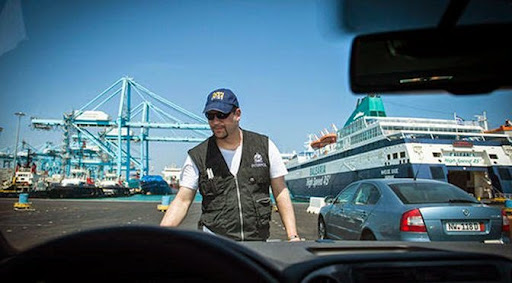
In an INTERPOL-supported operation in Spain targeting the trafficking of stolen vehicles, nearly 20 vehicles were recovered and some 15 individuals arrested. Led by the Spanish National Police, Operation Paso del Estrecho (which means ‘crossing the straits’), was conducted from 28 July to 1 August at the port of Algeciras in southern Spain, a known route used by organised criminal networks to smuggle cars stolen from throughout Europe into North Africa.

With the assistance of INTERPOL’s Stolen Motor Vehicles (SMV) unit, police monitored car ferries leaving the port en route to Morocco, with some 5,000 vehicles screened against INTERPOL’s SMV database. INTERPOL coordinated the deployment of 28 experts from seven countries to support the operation. The experts are members of the INTERPOL Stolen Motor Vehicles (SMV) Task Force, comprising police and private investigators who support member countries with operations targeting the theft and trafficking of motor vehicles. The INTERPOL SMV database contains more than 7 million records submitted by 128 member countries. In 2013, countries searched the database more than 125 million times, resulting in 117,000 positive hits. “Operation Paso del Estrecho was very important because it allowed us not only to detect and recover stolen vehicles from Spain and other European countries, but also to obtain crucial information that will allow us to continue our investigations into the organized crime groups dedicated to illegal vehicle trafficking,” said Ángel Arroyo Morales, Head of the vehicle crime investigation unit of the Spanish National Police Central Squad of Organized Crime. “There is no doubt that with strong cooperation between INTERPOL and police across Europe and beyond, we will continue to recover even more stolen vehicles before they can be used for criminal purposes,” he concluded. In addition, 15 people were arrested during the operation, including one Ukrainian and two Spanish nationals arrested in connection with a major investigation of the Central Squad of Organized Crime of the Spanish National Police.

They are suspected of being the masterminds behind a vast trafficking ring transporting stolen luxury cars between Spain and Ukraine, via Poland and Moldova. The stolen vehicles seized came from various European countries including Belgium, France, Germany, Italy, the Netherlands and Sweden, demonstrating the transnational character of this crime. “The trafficking of stolen vehicles is a crime that knows no borders. The only way to effectively combat the organized criminal networks behind this crime is therefore through coordinated joint actions, as evidenced by this successful operation,” said INTERPOL’s Director of Specialized Crime and Analysis, Glyn Lewis. Operation Paso del Estrecho is an annual initiative conducted by Spanish police in Algeciras – a major gateway between Europe and Africa which sees approximately 4.8 million people and 1.3 million vehicles pass through each year – to prevent stolen vehicles from leaving the country and to identify and disrupt the criminal groups responsible for the illicit trafficking. Highlighting the links between organized crime and the trafficking of stolen motor vehicles – which are often used in the commission of other serious crimes – is a key part of INTERPOL’s global Turn Back Crime campaign. The campaign aims to raise awareness of these hidden links, and of the very real effect these crimes can have on people’s daily lives.

Related Posts Plugin for WordPress, Blogger...